The Great Wildebeest Migration: A Front-Row Seat to Nature’s Greatest Show
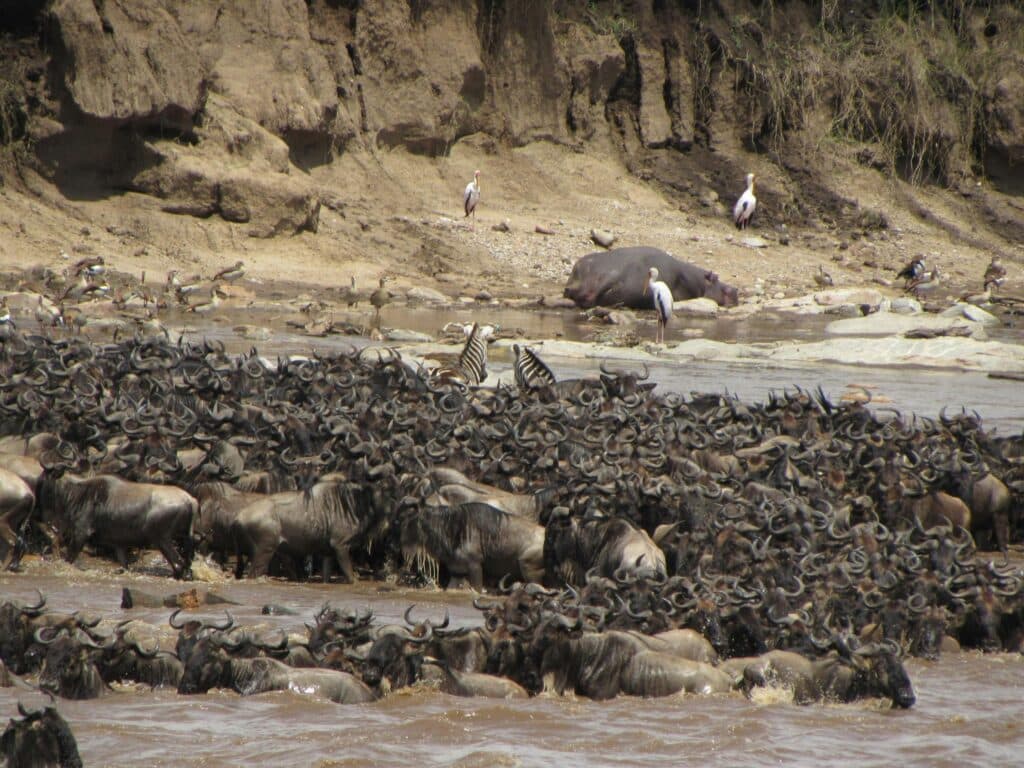
Over a million wildebeest, zebras, and gazelles surge across the Serengeti and into Kenya’s Masai Mara every year in a raw, untamed display of survival known as the Great Wildebeest Migration.
Recognized by National Geographic as one of the Seven Wonders of the Natural World, this annual journey is more than a wildlife event; it’s a front-row seat to life and death on the African plains. From dramatic river crossings to predator-packed plains, the migration offers travelers some of the most unforgettable safari moments on Earth.
In this guide, you’ll uncover the key stages of the Great Wildebeest Migration, what really happens on the ground, and why seeing it in person is unlike anything else on Earth.
What Is the Great Wildebeest Migration?
Picture more than a million wildebeest, flanked by zebras and gazelles, moving in rhythm across the open plains of East Africa. This is the Great Wildebeest Migration: a spectacle of instinct, endurance, and survival that plays out every year between Tanzania’s Serengeti and Kenya’s Masai Mara.
Each wildebeest travels between 800 and 1,000 kilometers over the course of the year, driven by the rains and the promise of fresh grazing. It’s a circular journey that has unfolded for centuries, touching every corner of the ecosystem it sustains. But this isn’t a peaceful trek. Crocodile-infested rivers, prowling big cats, and parched landscapes turn the migration into a high-stakes race for life.
It all begins in the southern Serengeti around January, when the calving season arrives. Thousands of calves are born within just a few weeks. By March and April, the herds start drifting northwest through the central Serengeti, eventually reaching the Western Corridor.
The migration reaches its dramatic peak from late July to August as the herds gather at the Mara River. These legendary crossings, where wildebeest plunge into swirling, crocodile-filled waters while predators wait on either side, are what safari dreams (and documentaries) are made of. Some crossings even continue into September, offering heart-stopping encounters well into the dry season.
More than just movement, this migration is the beating heart of the Serengeti–Masai Mara ecosystem, feeding predators, shaping landscapes, and reminding us just how wild the wild can be.
When and Where Does the Great Wildebeest Migration Happen?
The Great Wildebeest Migration doesn’t happen all at once; it’s a continuous, year-round cycle that moves with the rhythm of the seasons. From dramatic river crossings to newborn calves taking their first steps, each time of year offers something unique. Whether you’re drawn to action, scenery, or wildlife photography, here’s how the migration unfolds month by month.
January to March: Calving Season (Southern Serengeti & Ndutu Plains)
This is where the journey begins. From late January to February, the southern Serengeti and Ndutu regions transform into a vast nursery as nearly 500,000 calves are born within just a few weeks. It’s a breathtaking time to visit. There are lush landscapes, new life everywhere, and intense predator action as lions and cheetahs take advantage of the abundance of prey.
July to September: The Mara River Crossings (Northern Serengeti & Masai Mara)
This is the highlight of the migration. From late July to August, the herds gather in the northern Serengeti, preparing to cross the Mara River into Kenya’s Masai Mara. These crossings are intense, unpredictable, and emotional. Wildebeest leap into crocodile-filled waters while big cats lurk on the banks. Crossings may continue into September, depending on the rains.
October to December: Return South (Masai Mara to Central Serengeti)
By October, the herds begin making their way back south through the eastern Serengeti, grazing as they go. The landscape starts to green again by November with the arrival of short rains, guiding the wildebeest back to where it all began — the southern Serengeti.
What to expect: Transitional herds, peaceful scenery, fewer tourists
Best for: Off-peak travel, diverse wildlife sightings, early green season
Best Places to See the Great Wildebeest Migration
The migration doesn’t unfold in a single place; it sweeps across the landscapes of Tanzania and Kenya like a living tide. From calving grounds to river crossings, each region tells a different chapter of the story. These are the best places to witness it all.
Ndutu Plains (Southern Serengeti): Calving & Predator Action
From January to March, the Ndutu Plains in the southern Serengeti offer the best front-row seat to the wildebeest calving season. Here, the landscape turns green, and herds gather in the thousands to give birth. It is a remarkable display of life, followed closely by the predators it inevitably attracts.
Grumeti Reserve & Western Corridor: The First Crossings
From May to June, the herds move into the Western Corridor, crossing the Grumeti River. While less famous than the Mara, this area offers quieter, off-the-beaten-path encounters, often with fewer vehicles. It’s also rich in birdlife and forested terrain, adding variety to your safari.
Mara River (Northern Serengeti & Masai Mara): Iconic Crossings
If there’s one spot synonymous with the migration, it’s the Mara River. Between late July and September, this is where the action reaches its peak. Watching thousands of wildebeest leap into the river while crocodiles and big cats wait nearby is the kind of moment you never forget. The river winds through both the northern Serengeti (Tanzania) and Masai Mara (Kenya), offering epic views from either side.
Eastern & Central Serengeti: Return Leg of the Journey
From October to December, the herds begin their return south. Areas around Seronera (central Serengeti) and Namiri Plains offer great game viewing during this transitional phase. The rains start to fall again, painting the plains green and drawing the herds home.
Why the Great Wildebeest Migration Matters
The Great Wildebeest Migration is more than just an incredible show of nature; it’s a vital part of the ecosystem that supports life across the Serengeti and Masai Mara.
As the herds move through the landscape, they do more than just search for greener grass. Their movement helps keep the savannah healthy. Grazing patterns shape plant growth, droppings enrich the soil, and the constant motion creates space for other animals to thrive, including insects, birds, and smaller herbivores.
Predators like lions and hyenas time their hunting and breeding around the migration, relying on the seasonal availability of prey. River crossings stir up aquatic systems, feeding fish and even affecting birdlife. Every stage of the journey, from calving to crossings, plays a crucial role in maintaining the balance between predator and prey.
In many ways, the migration is what keeps this entire region alive. Protecting it isn’t just about the wildebeest; it’s about preserving one of the most important and interconnected ecosystems on the planet.
A Journey Like No Other
Witnessing the Great Wildebeest Migration isn’t just about checking a box on your travel bucket list; it’s about being part of one of the most powerful and untamed spectacles on Earth. From newborn calves taking their first steps to river crossings filled with tension and triumph, every moment is a raw reminder of nature’s rhythm and resilience.
Whether you’re drawn to the drama of the Mara River, the quiet beauty of the Ndutu plains, or the sheer scale of the herds as they move across endless savannahs, this experience stays with you long after the dust settles.
Let Woodley Wild Adventures take you there.
We specialize in tailor-made migration safaris that put you in the heart of the action with expert guides, carefully chosen camps, and seamless planning from start to finish. Whether it’s your first safari or your fifth, we’ll help you experience the migration at its most unforgettable.
Because some wonders are better seen in person. Contact us today to book a safari.